Launch offer — valid today only

📄 Digital book in PDF · read it on your phone or print it

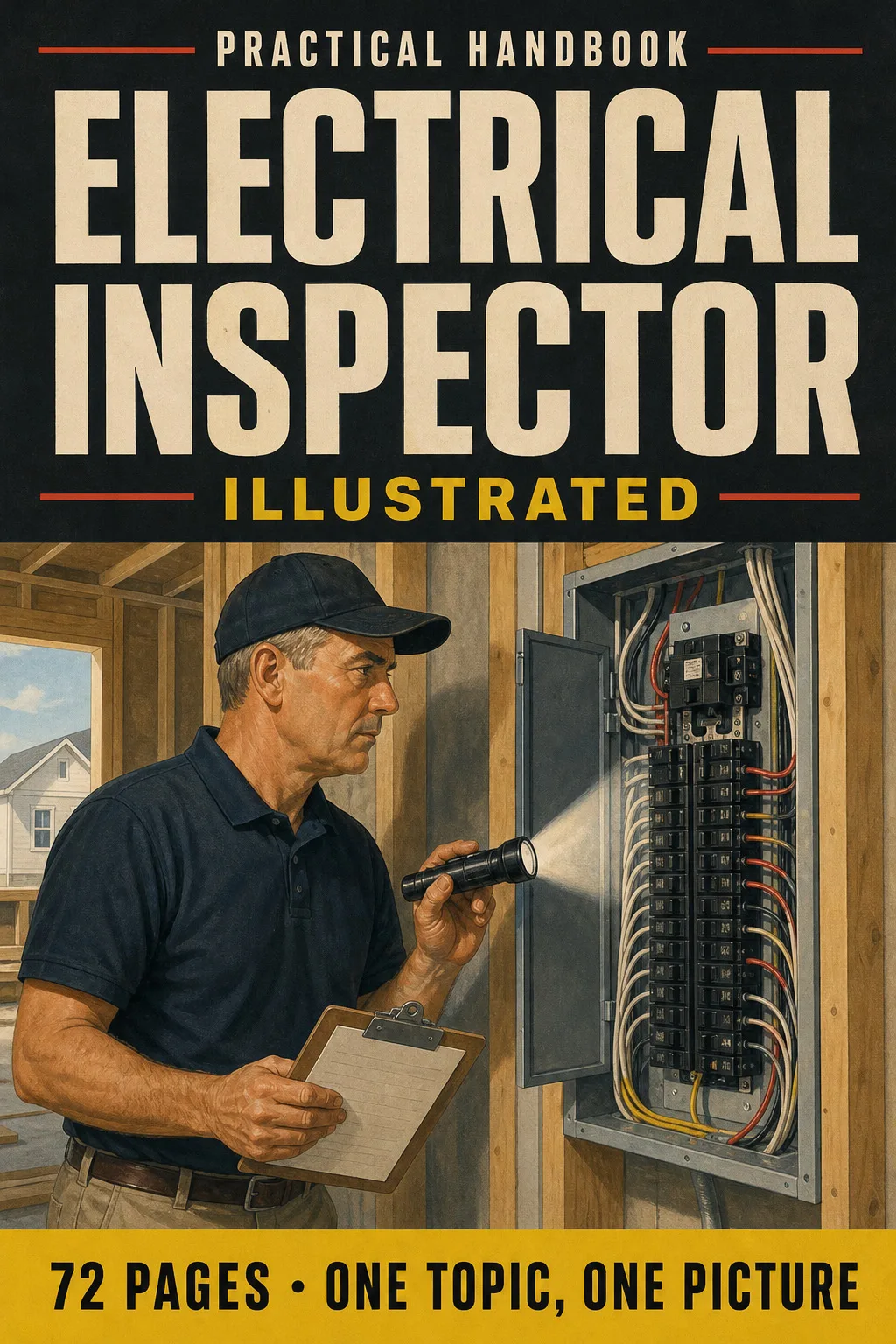
Residential Electrical Inspector Exam: the NEC in Drawings Rough-In to Final, One Page Each

Service clearances, grounding and bonding, wire vs breaker size, NM cable, box fill, receptacle spacing, GFCI and AFCI, the final inspection. Every topic gets its own page: the drawing first, then what you need to remember. 72 illustrated pages.

GET THE ILLUSTRATED INSPECTOR BOOK

🔒 Secure checkout · PDF by email · 30-day guarantee

Every topic, its own pageEach code rule drawn, with the explanation and the section number beside it
72 illustrated pages9 parts, from how an inspection runs to the before-the-exam checklist
Up-to-date sourcesNFPA 70 (NEC) 2023, with 2020 and 2017 changes flagged
PDF by emailFormat

Look Inside the Book

Every page has one big drawing and a box with the numbers and section references you need to know:

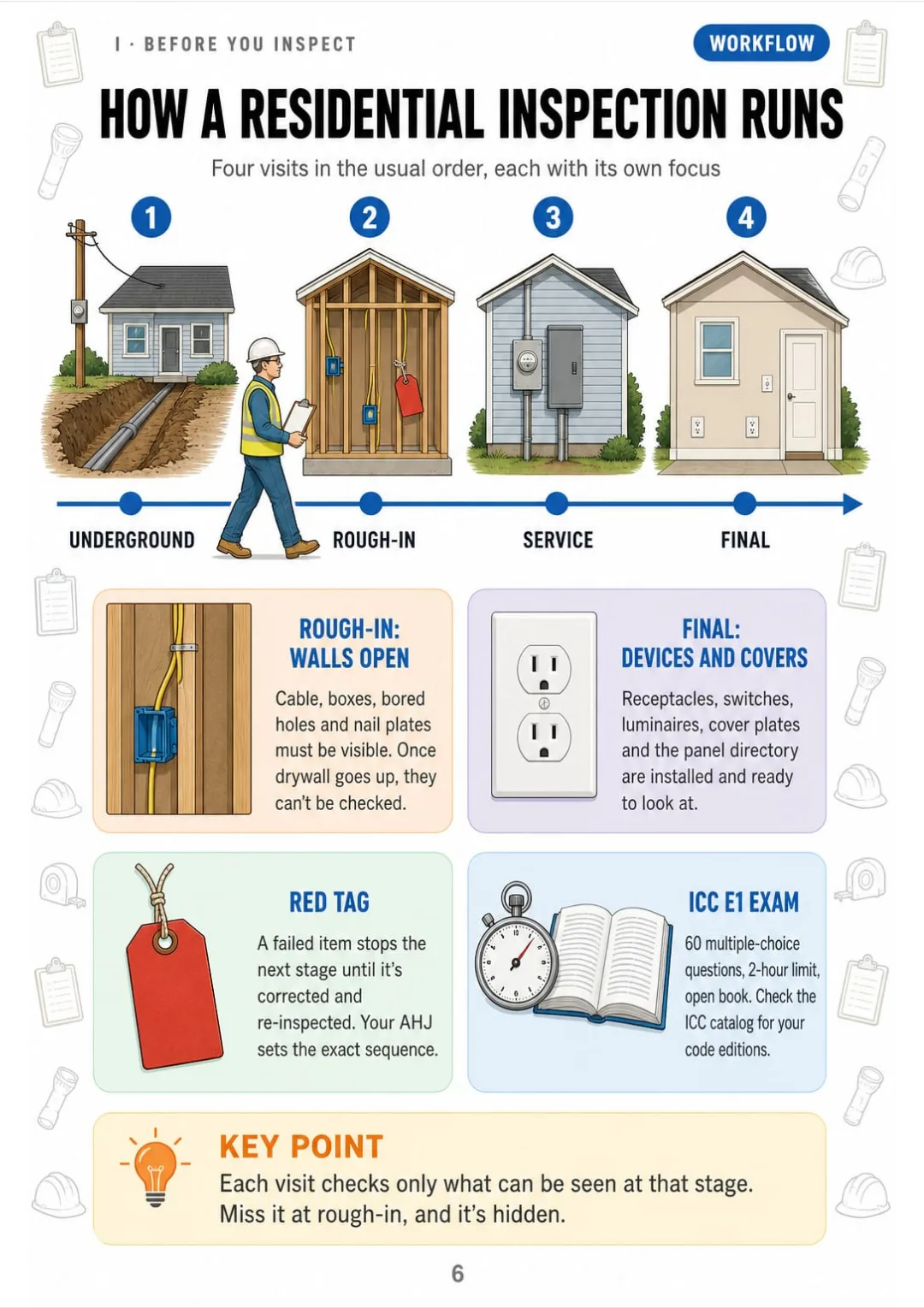
Four inspection stages in order, and the ICC E1 exam: 60 questions, 2 hours, open book.
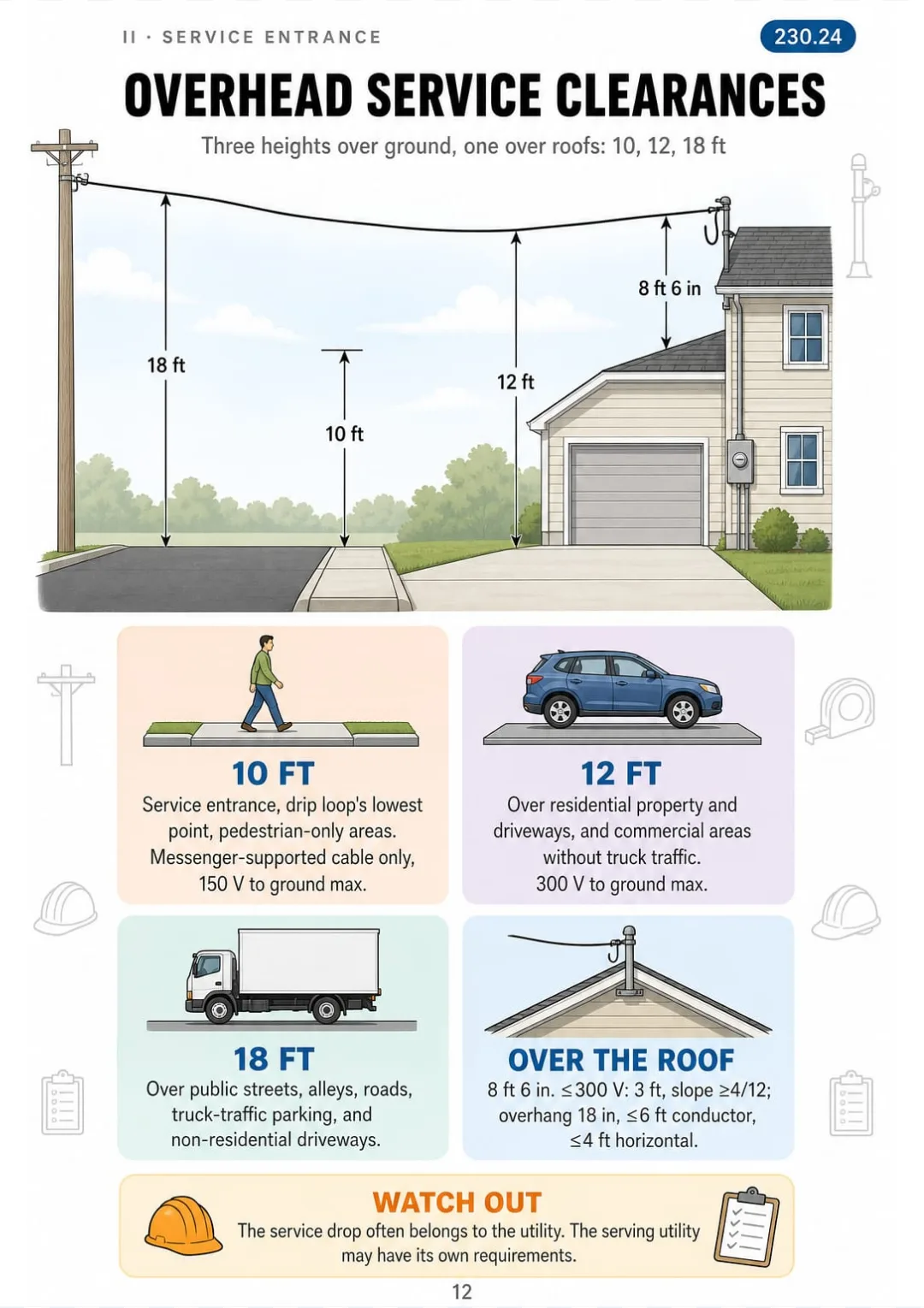
230.24: 10 ft sidewalk, 12 ft driveway, 18 ft street, 8 ft 6 in over the roof
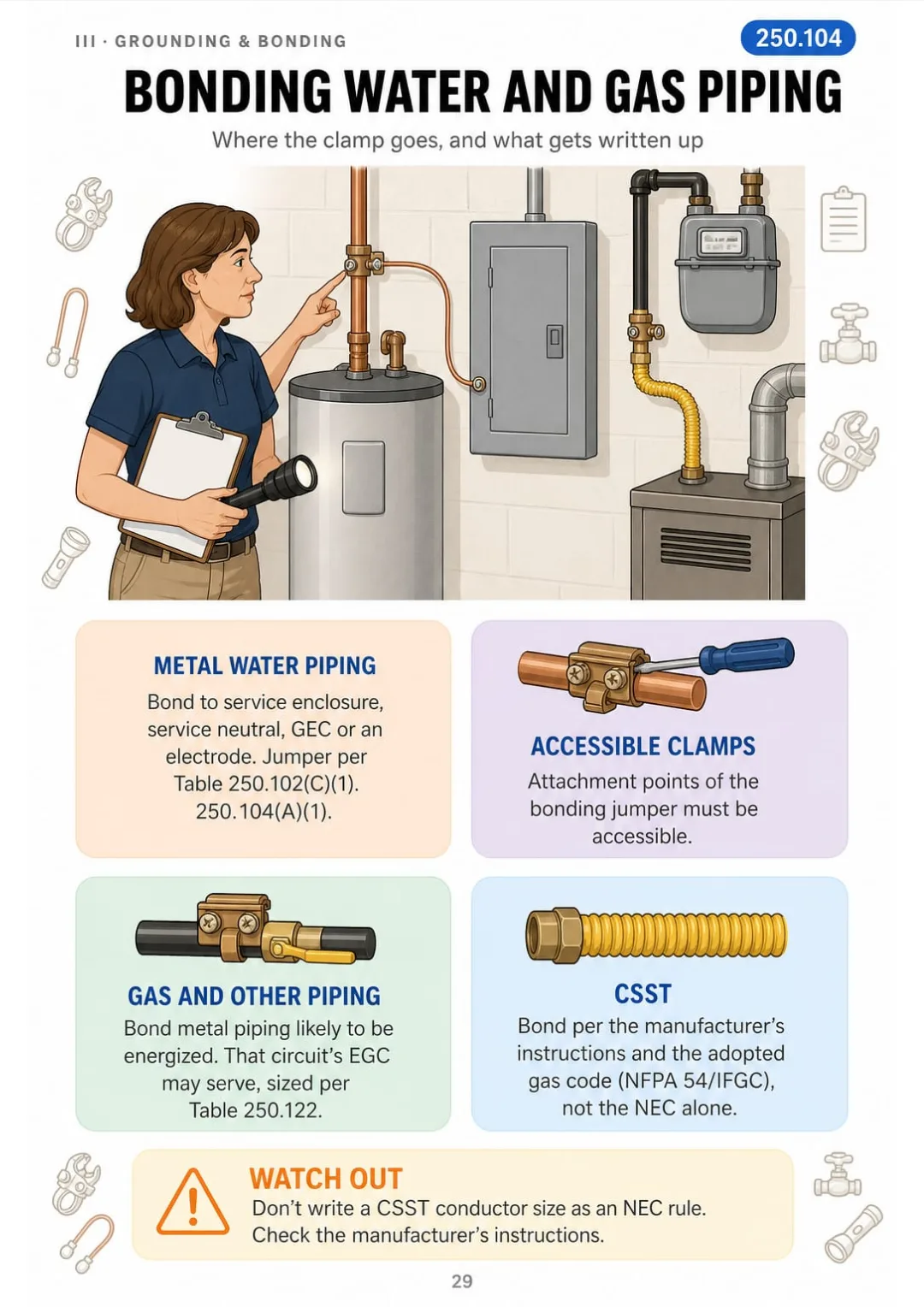
250.104(A) and (B): water pipe jumper per Table 250.102(C)(1), gas via the EGC, CSST per manufacturer
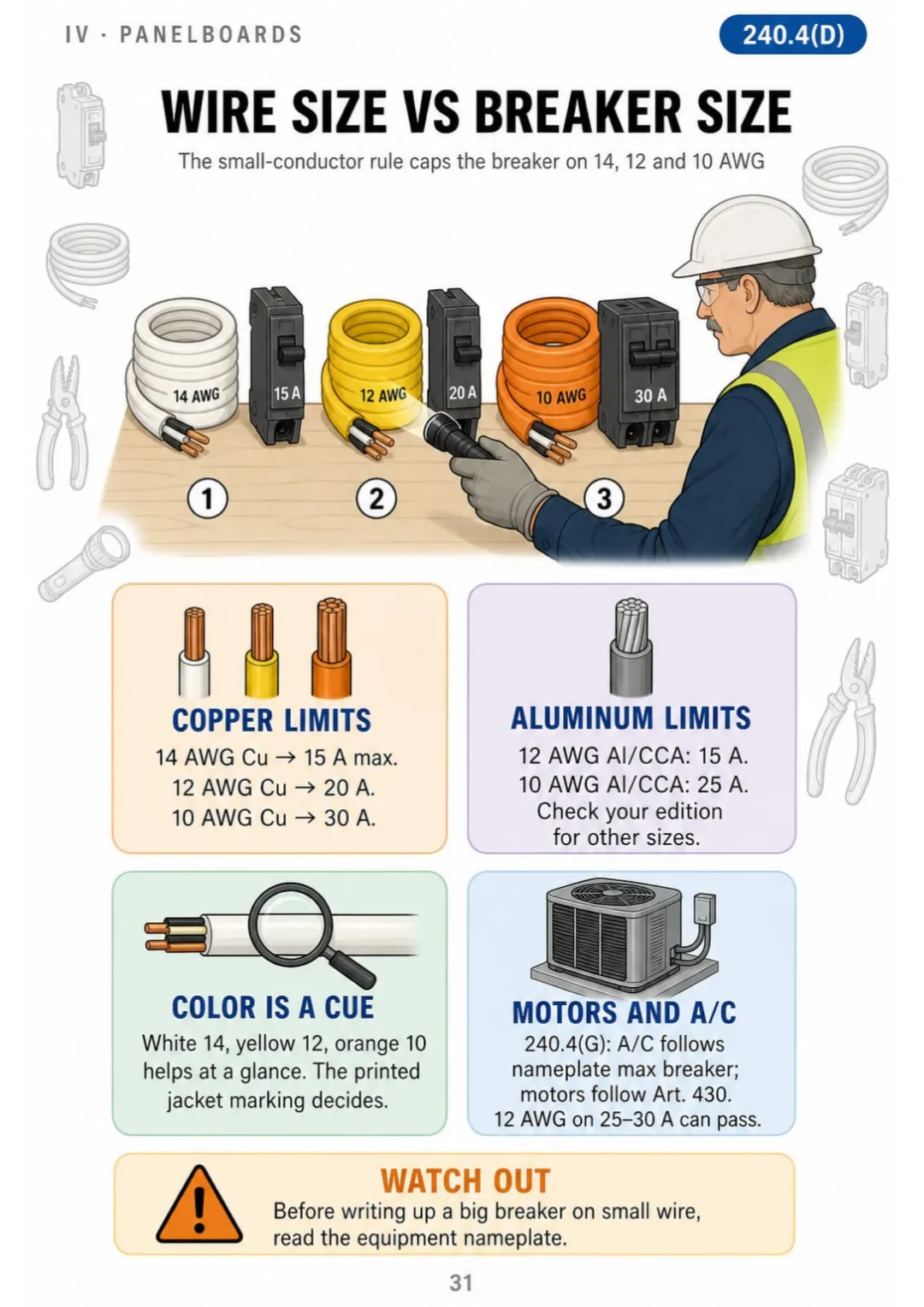
240.4(D): 14 AWG → 15 A, 12 AWG → 20 A, 10 AWG → 30 A copper.
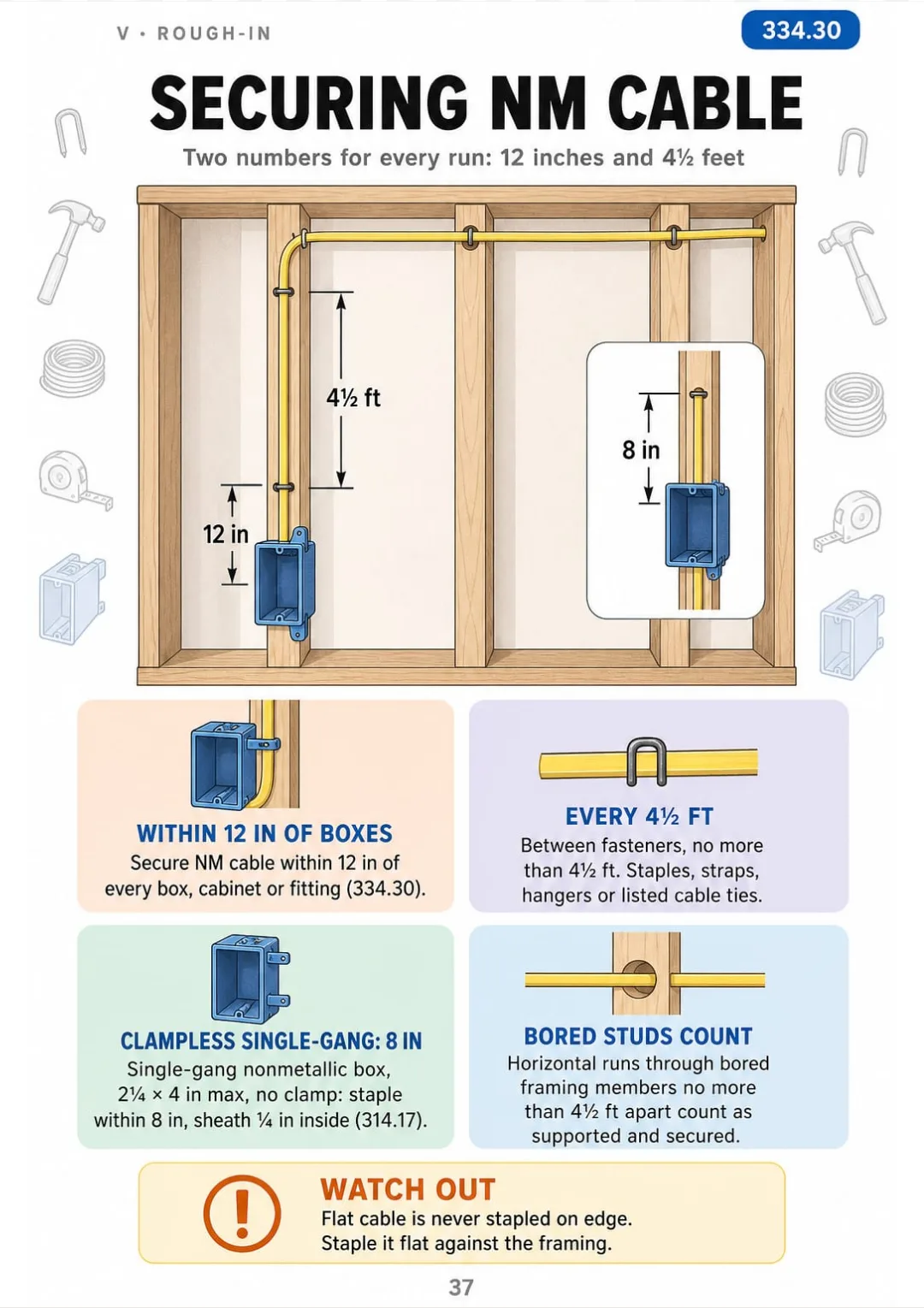
NM cable: secured within 12 in of the box and every 4½ ft (334.30); 8 in for clampless single-gang boxes (314.17).
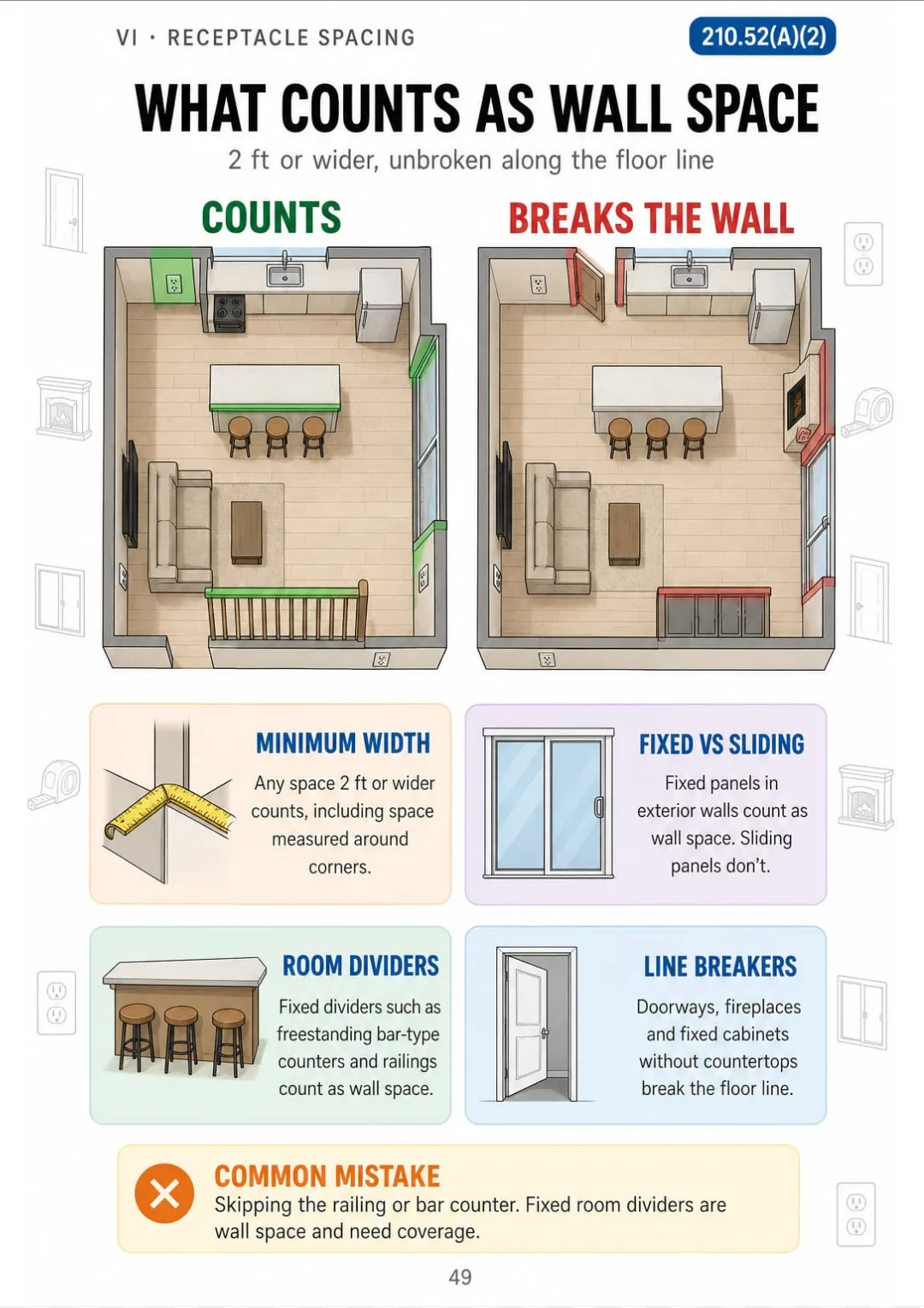
210.52(A)(2): 2 ft or wider counts; doorways, fireplaces and sliding panels break it.
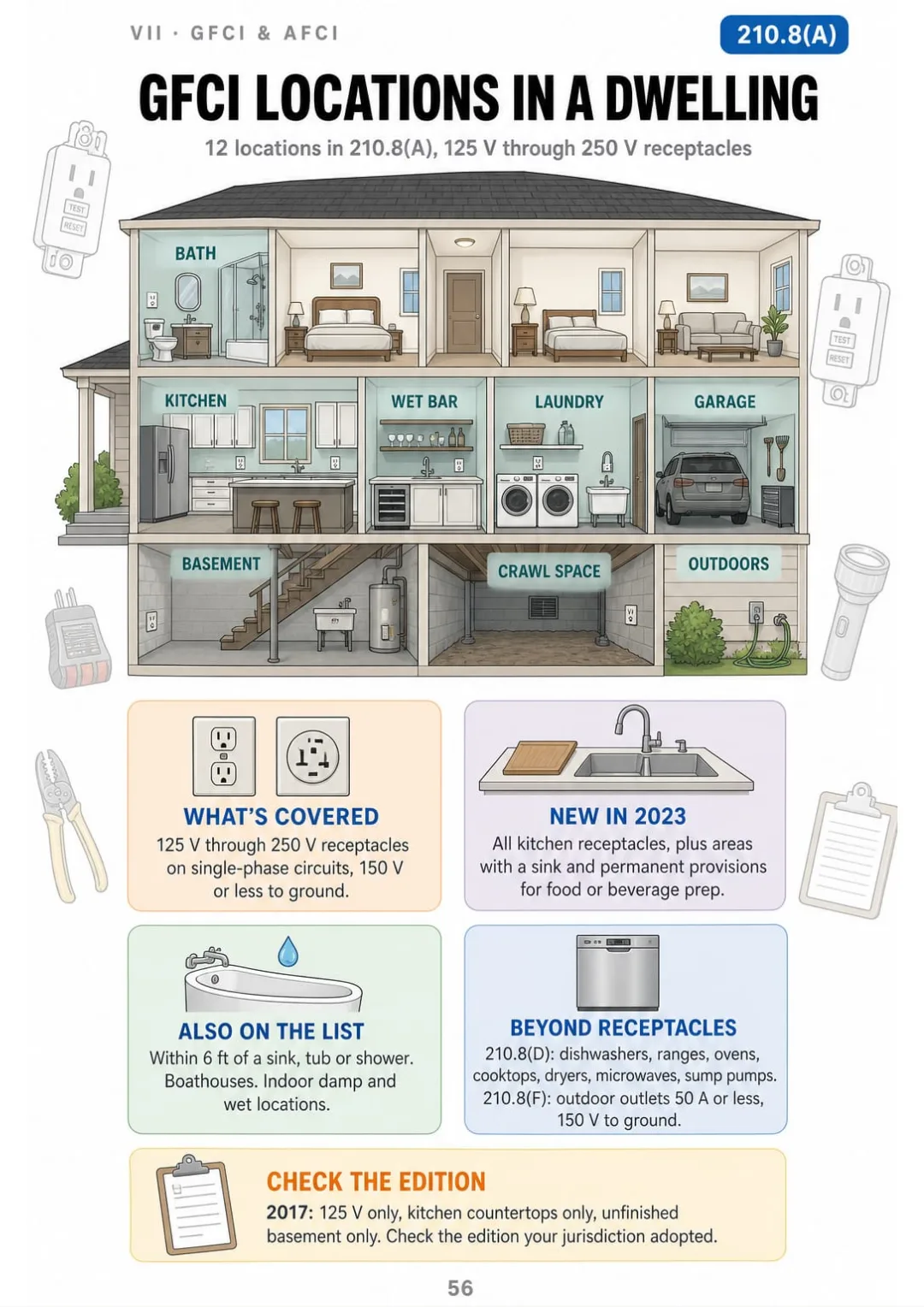
210.8(A), 2023: 12 dwelling GFCI locations, receptacles 125 V through 250 V.
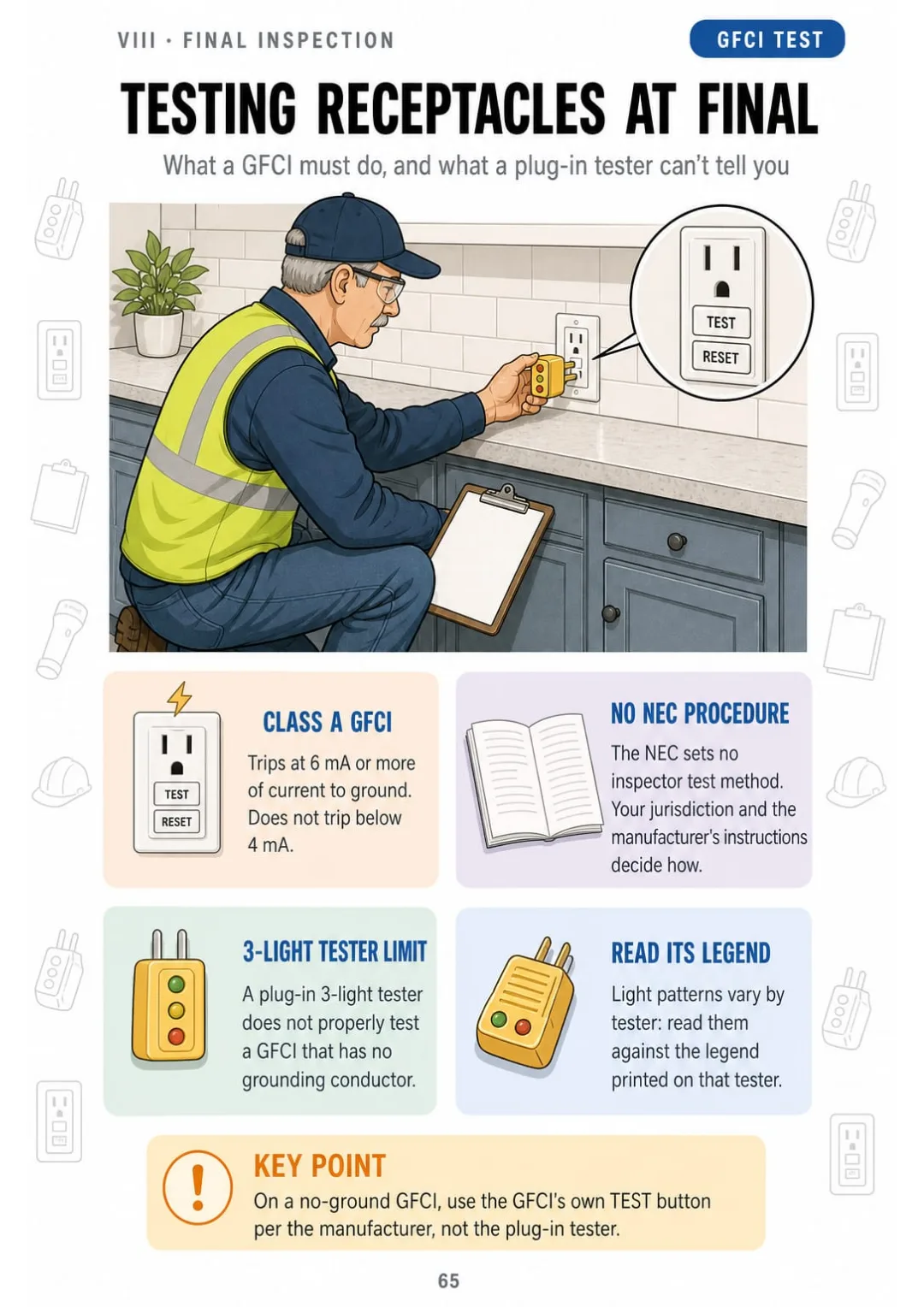
Class A GFCI: trips at 6 mA, holds below 4 mA; test method set by your AHJ and the manufacturer.

Swipe to see more →

These are real pages from the book. The table of contents is the full one: 9 parts and 67 topics.

The Problem Isn't You. It's How It Was Explained to You.

You're on a practice question: is the equipment grounding conductor the same thing as the grounded conductor? You've wired a thousand panels, and for a second the two words sound exactly alike.

In the code book it's Article 100: definitions in a row, each one leaning on the next. Paragraphs of words for something you've only ever learned with your hands.

250.104(A) and (B): water pipe jumper per Table 250.102(C)(1), gas via the EGC, CSST per manufacturer

In the book, grounding vs bonding is one page: the fault path drawn from the device back to the source, with the grounded conductor, the EGC and the bonding each marked on the drawing.

The rest of the part works the same way. Ground rods, the main bonding jumper, subpanels with isolated neutrals, water and gas piping bonding: each one has its own page.

You see where the fault current travels, you know which word means what, and you answer without flipping back through the definitions.

COMPARE FOR YOURSELF

The Same Topic, Two Ways to Study It

THIS
  • The manual: line after line
  • Service clearances explained only in words
  • You walk into the exam with doubts
Service-drop conductors up to 1000 volts must keep a minimum vertical distance from finished grade or any accessible surface beneath them. That distance is 10 ft where only pedestrians can reach and the voltage to ground does not exceed 150 V, 12 ft over residential property and driveways up to 300 V to ground, and 18 ft over public streets, alleys and roads where truck traffic is possible, while the distance above roofs follows its own set of conditions and exceptions, listed in a separate subsection.
FOR THIS
  • The service drop in one drawing
  • The clearances in a box: 10, 12, 18 ft and the roof
  • You see it and you get it
230.24: 10 ft sidewalk, 12 ft driveway, 18 ft street, 8 ft 6 in over the roof
CONTENTS

Take a Look at the 9 Parts and 67 Topics

Before you inspect, service entrance, grounding and bonding, panelboards and overcurrent, rough-in cable and boxes, branch circuits and receptacle spacing, GFCI and AFCI, final inspection, and red tags with exam review: 72 pages, all illustrated.

IBefore You Inspect · pp. 6-11
  1. How a Residential Inspection Runs
  2. How the NEC Is Built
  3. Reading a Section Number
  4. The Open-Book Look-Up Method in 4 Steps
  5. Article 100 Definitions That Change the Answer
  6. 2017 vs 2020 vs 2023: What Moved for Dwellings
IIService Entrance · pp. 12-20
  1. Overhead Service Clearances
  2. Clearance from Windows, Doors and Porches
  3. Mast, Service Head and Drip Loop
  4. Sizing Dwelling Service Conductors
  5. Service Disconnect Location and Count
  6. Outdoor Emergency Disconnect
  7. Surge Protection at the Service
  8. Working Space in Front of the Panel
  9. Where the Panel Can't Go
IIIGrounding and Bonding · pp. 21-30
  1. Grounding vs Bonding
  2. The Grounding Electrode System
  3. Ground Rods: Length, Spacing, Depth
  4. Concrete-Encased Electrode (Ufer)
  5. Metal Water Pipe as Electrode
  6. Sizing and Protecting the GEC
  7. Main Bonding Jumper: Neutral and Ground Meet Once
  8. Subpanels: Neutrals Isolated, Grounds Bonded
  9. Bonding Water and Gas Piping
  10. Intersystem Bonding Termination
IVPanelboards and Overcurrent · pp. 31-36
  1. Wire Size vs Breaker Size
  2. NM Cable Ampacity at 60 °C
  3. Double Taps and Terminal Listing
  4. One Neutral per Terminal, Openings Closed
  5. Circuit Directory
  6. Multiwire Branch Circuits
VRough-In: Cable and Boxes · pp. 37-46
  1. Securing NM Cable
  2. Bored Holes and Nail Plates
  3. Cable Entering the Box
  4. Free Conductor Length
  5. Box Fill: What Counts
  6. Box Fill: Volume per Conductor
  7. Box Fill Worked Example
  8. Box Setback and Gaps
  9. Boxes for Luminaires and Ceiling Fans
  10. Underground Burial Depths
VIBranch Circuits and Receptacle Spacing · pp. 47-55
  1. Required Dwelling Circuits
  2. The 6-Foot Rule on General Walls
  3. What Counts as Wall Space
  4. Kitchen Countertops: 24 Inches
  5. Islands and Peninsulas by Edition
  6. Bathroom Receptacles: 36 Inches from the Basin
  7. Outdoor, Garage and Basement
  8. Hallways and Foyers
  9. Tamper-Resistant and Weather-Resistant
VIIGFCI, AFCI and Special Locations · pp. 56-62
  1. GFCI Locations in a Dwelling
  2. Measuring 6 Feet from a Sink
  3. AFCI Locations
  4. AFCI Protection Methods
  5. Luminaires over Tubs and Showers
  6. Closet Luminaire Clearances
  7. Ranges, Dryers and Fixed Appliances
VIIIFinal Inspection · pp. 63-66
  1. Lighting Outlets and Switches
  2. Devices, Covers and Plates
  3. Testing Receptacles at Final
  4. Listing, Labeling and Markings
IXRed Tags and Exam Review · pp. 67-72
  1. Frequent Rough-In Write-Ups, Before and After
  2. Frequent Service and Grounding Write-Ups, Before and After
  3. Frequent Receptacle and GFCI Write-Ups, Before and After
  4. The Numbers to Tab on One Page
  5. Look-Up Drill: Question to Section
  6. Before-the-Exam Checklist

One Page, One Topic, All Clear

Think of it this way:

You're on a rough-in and the contractor asks why you flagged the kitchen. The small-appliance circuits are one short, and you need the section to write it up.

You open the page on required dwelling circuits and see the house drawn: two small-appliance, one laundry, one bathroom and one garage circuit, all 20 A, with 210.11(C) right next to it.

NM cable: secured within 12 in of the box and every 4½ ft (334.30); 8 in for clampless single-gang boxes (314.17).

Same with service clearances, NM cable securing, box fill step by step, wire vs breaker size and GFCI locations: each one on its own page, in this book.

Electrical Inspector Illustrated is 9 parts and 67 topics, all drawn, and at the end the frequent write-ups before and after, the numbers to tab and a look-up drill.

What you see drawn, you don't have to memorize.

What's Inside Electrical Inspector Illustrated:

Ipp. 6-11

Before You Inspect

Know where to look before you open the code book: how a residential inspection runs, how the NEC is built, reading a section number, the 4-step open-book look-up method, Article 100 definitions and what moved between 2017, 2020 and 2023.

IIpp. 12-20

Service Entrance

Overhead clearances, windows and porches, mast and drip loop, service conductor sizing, disconnect location and the outdoor emergency disconnect, surge protection, working space and where the panel can't go.

IIIpp. 21-30

Grounding and Bonding

Stop mixing up grounding and bonding: the two drawn side by side, the electrode system, ground rods, the Ufer, metal water pipe, the GEC, the main bonding jumper, subpanels, water and gas bonding and the intersystem bonding termination.

IVpp. 31-36

Panelboards and Overcurrent

Wire size vs breaker size, NM ampacity at 60°C, double taps, one neutral per terminal, closing unused openings, the circuit directory and multiwire branch circuits.

Vpp. 37-46

Rough-In: Cable and Boxes

Securing NM cable, bored holes and nail plates, cable entering the box, free conductor length, box fill step by step, box setback, fan and luminaire boxes and burial depths.

VIpp. 47-55

Branch Circuits and Receptacle Spacing

Required dwelling circuits, the 6-foot rule, wall space, kitchen countertops, islands and peninsulas by edition, bathrooms, outdoor, garage and basement, hallways and TR/WR receptacles.

VIIpp. 56-62

GFCI, AFCI and Special Locations

GFCI locations, measuring 6 feet from a sink, AFCI locations and methods, luminaires over tubs and showers, closet clearances and ranges, dryers and fixed appliances.

VIIIpp. 63-66

Final Inspection

Lighting outlets and switches, devices, covers and plates, testing receptacles at final, and listing, labeling and markings.

IXpp. 67-72

Red Tags and Exam Review

Your numbers in one place before exam day: frequent rough-in, service and receptacle write-ups before and after, the numbers to tab on one page, a question-to-section drill and the before-the-exam checklist.

At the end of the book: Frequent write-ups drawn before and after, the numbers to tab on one page and a question-to-section look-up drill.
Plus: 2 Free Books

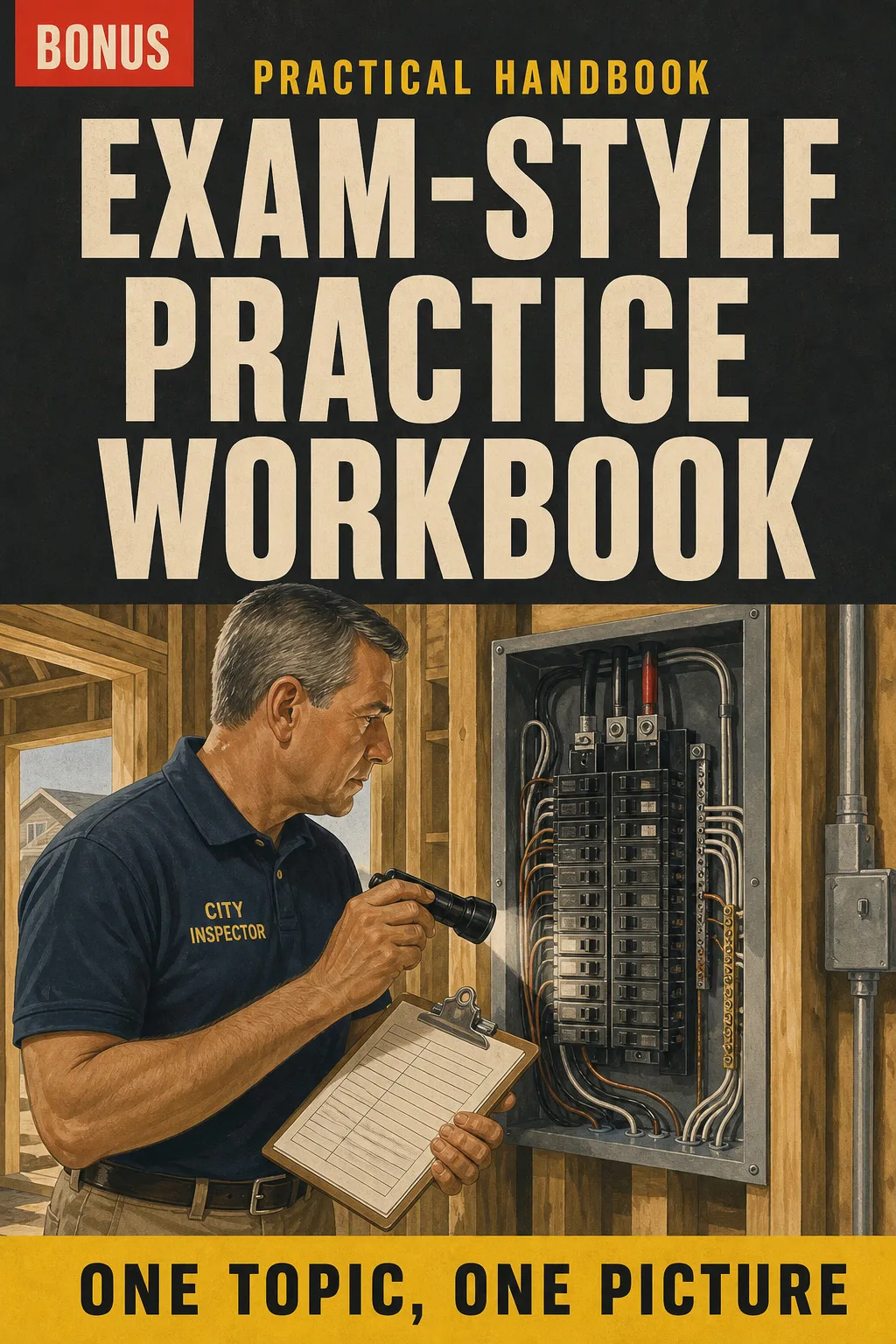
Exam-Style Practice Workbook

BONUS 1: «Exam-Style Practice Workbook»

Value on its own: US$ 17.90

Open-book style questions with the answer and the code section where you find it, so you practice looking things up against the clock, not just knowing them.

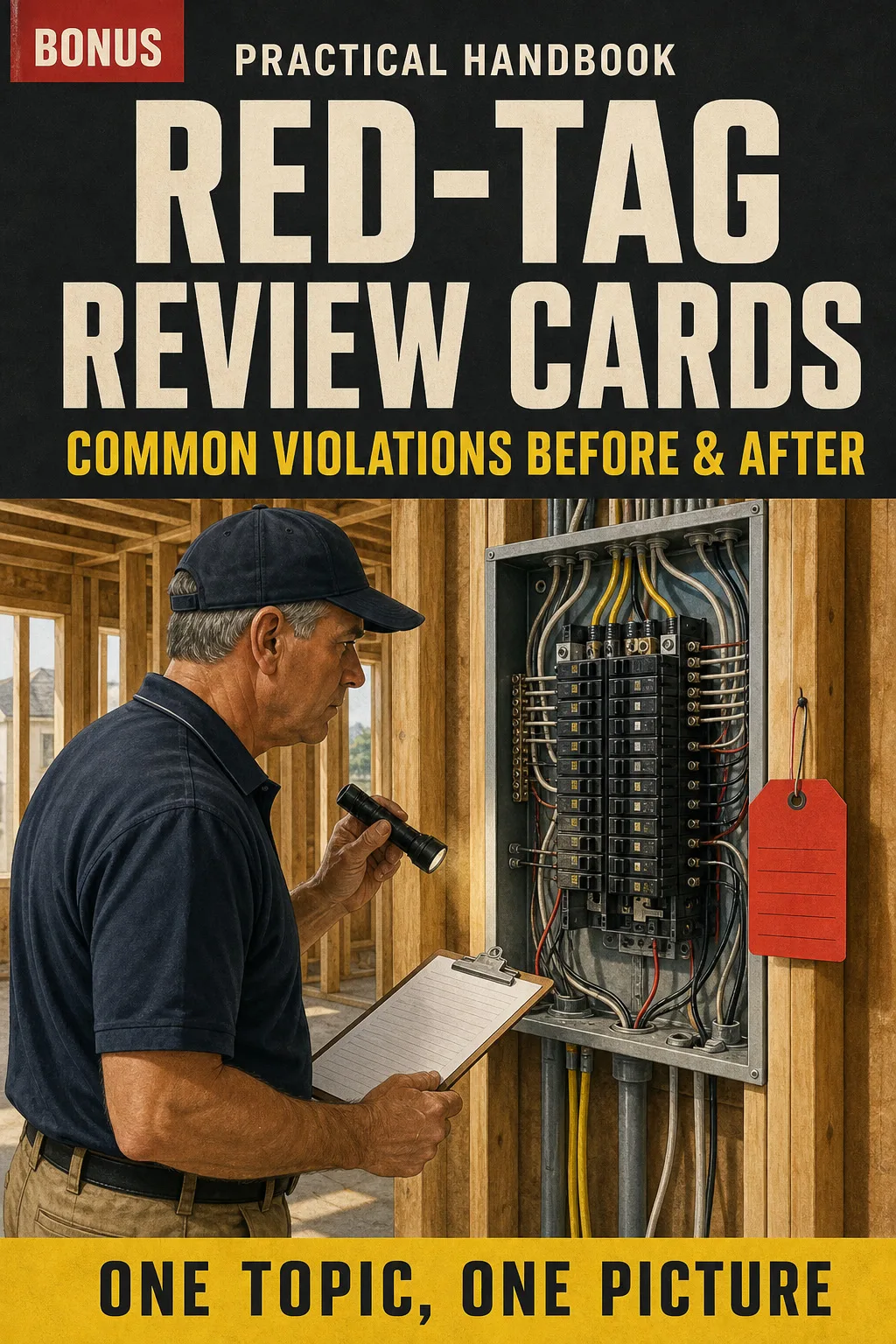
Red-Tag Review Cards: Common Violations Before & After

BONUS 2: «Red-Tag Review Cards: Common Violations Before & After»

Value on its own: US$ 14.90

Quick-review cards of the most frequent residential violations, each drawn wrong and right, to print and keep on your clipboard.

Electrical Inspector Illustrated with 2 Free Books

  • Electrical Inspector Illustrated: 72 illustrated pagesUS$ 63
  • BONUS 1: Exam-Style Practice WorkbookUS$ 17.90
  • BONUS 2: Red-Tag Review Cards: Common Violations Before & AfterUS$ 14.90
  • High-resolution PDF to printIncluded
Total value US$ 95.80
YOUR PRICE:
US$ 27
You save US$ 68.80
YES, I WANT ELECTRICAL INSPECTOR ILLUSTRATED FOR US$ 27

📄 This is a digital PDF book sent to your email: nothing is printed or shipped.

Secure purchaseEncrypted payment30-day guarantee

PDF by email: We email you Electrical Inspector Illustrated as a PDF, together with the two free books. It's a single payment: no installments, no extra charges.

Who This Book Is For

You're studying for the inspector certification

You're studying for the inspector certification

You already know the work. The book puts it in inspection order, rough-in to final, with the section number next to each rule.

Your exam date is close

Your exam date is close

The numbers to tab on one page and the look-up drill help you go from question to section without losing minutes in the code book.

You already inspect or wire houses

You already inspect or wire houses

Print it and keep it on your clipboard: receptacle spacing, GFCI locations and the frequent write-ups, drawn before and after.

Everything You Get Today

US$ 95.80US$ 27
YES, I WANT ELECTRICAL INSPECTOR ILLUSTRATED FOR US$ 27

📄 This is a digital PDF book sent to your email: nothing is printed or shipped.

30DAYS
GUARANTEE

30-Day Guarantee

Try Electrical Inspector Illustrated for 30 days, bonus books included.

We refund everything if the file won't open, if the book isn't what you see here, if you were charged twice or if the email doesn't arrive. Just email us.

You pay once. No subscriptions.

Frequently Asked Questions

Is it for me if I've been wiring houses for 20 years?

Yes. It doesn't teach you to wire. It puts what you already do in inspection order, with the code section next to each rule, which is what the exam asks for.

Where does the content come from?

From NFPA 70, the National Electrical Code, checked against the 2023 edition, with 2020 and 2017 changes flagged. Every page gives the section number so you can confirm it in the edition your jurisdiction adopted, with its local amendments.

Is it official material?

No. It's independent study material, not published or endorsed by NFPA, ICC or any certifying body. It doesn't give you a certificate or continuing education hours.

Does it replace the code book or a prep course?

No. For an open-book exam you still bring the code book your exam allows. Check your exam bulletin first: some residential inspector exams reference the electrical chapters of the IRC instead of NFPA 70, and those follow the NEC with their own section numbers. This book gives NEC section numbers and helps you understand each rule and find it faster.

Are the practice questions the ones on the exam?

No. They're written for this book, in open-book style, with the answer and the section where you find it.

When and how do I get it?

The book and the 2 bonus books arrive as PDFs by email, at the address you enter at checkout.

Do I have to pay every month?

No. It's a one-time payment. No subscription.

Can I have it on paper?

Yes. The PDF is ready to print at home or at a print shop, so you can keep it in your binder or on your clipboard.

How does the refund work?

You have 30 days. We refund everything if the file won't open, if the book isn't what you see on this page, if you were charged twice or if the email doesn't arrive: just email us.

Before You Close This Page

No more rereading the code without it sticking.

Grounding vs bonding: you see it drawn, and that's it.

You walk into the exam knowing where everything is.

Drawings make studying faster.

The book is right below.

One-time payment: US$ 27 · Guarantee: 30 days · PDF by email

YES, I WANT ELECTRICAL INSPECTOR ILLUSTRATED FOR US$ 27

📄 This is a digital PDF book sent to your email: nothing is printed or shipped.